

Search Website
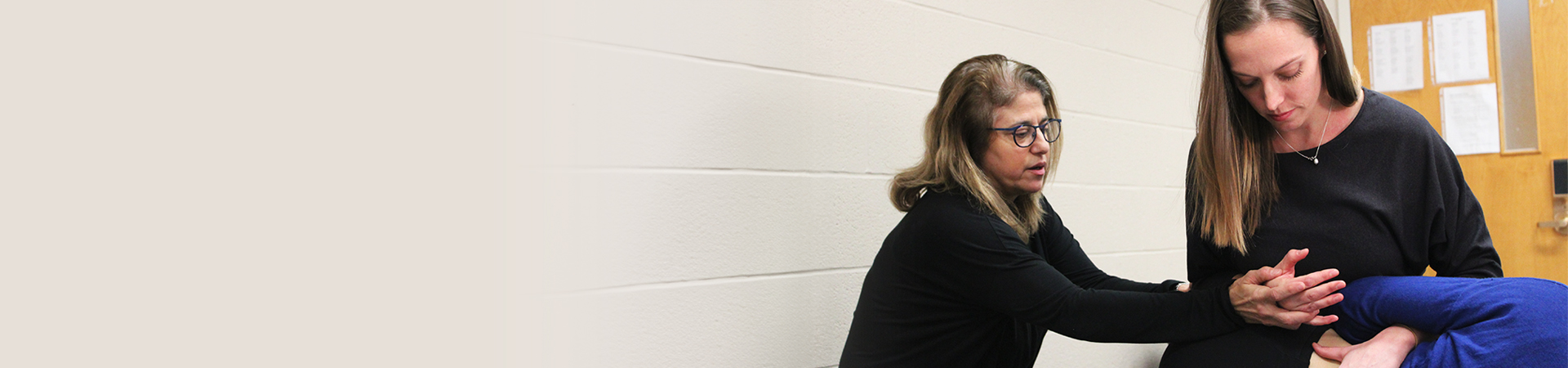
Comprehensive Musculoskeletal Physiotherapy (MCISc)
Building advanced practice, clinical reasoning, and skills that foster confident clinicians.
Comprehensive Musculoskeletal Physiotherapy (MCISc)
Building advanced practice, clinical reasoning, and skills that foster confident clinicians.
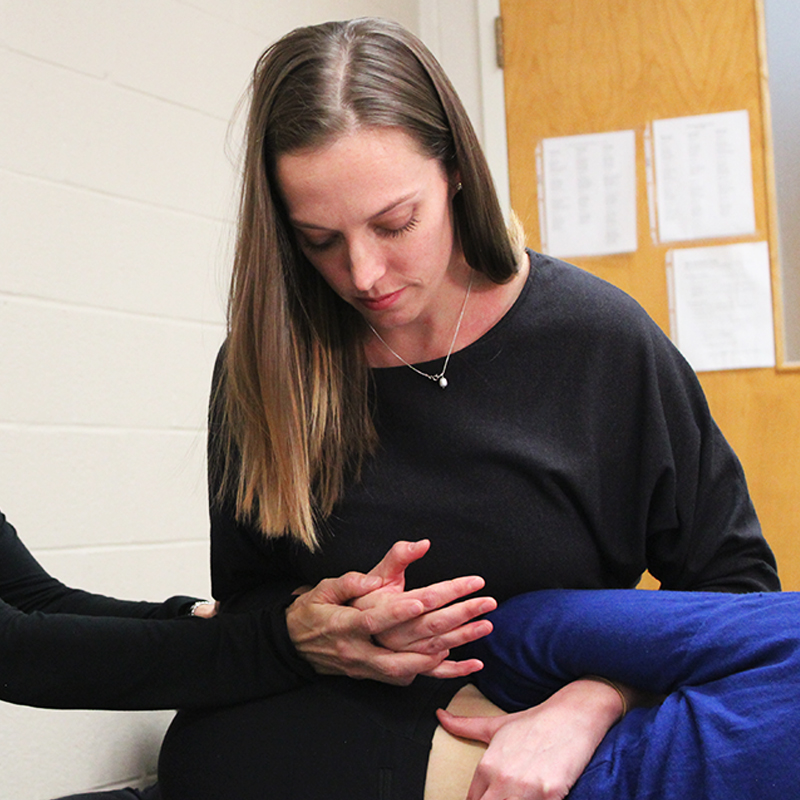
Comprehensive Musculoskeletal Physiotherapy (MCISc)
Building advanced practice, clinical reasoning, and skills that foster confident clinicians.
(MCISc)
About CMP
Question your approach, harness research and cultivate your clinical expertise. The Comprehensive Musculoskeletal Physiotherapy (CMP) field in the Advanced Health Care Practice master's program offers advanced practice education in orthopaedic physiotherapy for experienced clinicians. You’ll use advanced evidence-informed clinical reasoning skills to differentially diagnose, assess and manage musculoskeletal clients and if indicated learn manipulative therapy skills, and how and when to best apply them.
The program’s curriculum emphasizes an evidence-informed approach to physiotherapy that encourages life-long learning and prepares you to thrive in any clinical environment. You’ll develop an evidence-informed approach that will improve your assessment and treatment of complex musculoskeletal clinical conditions. Rely less on habit, and more on the experience of knowledge.
- Program Name: Advanced Health Care Practice
- Field: Comprehensive Musculoskeletal Physiotherapy (Clinical)
- Faculty: Health Sciences
- Application Deadline: April 30th
- Contact: ahcp@uwo.ca
Why Choose Comprehensive Musculoskeletal Physiotherapy at Western?
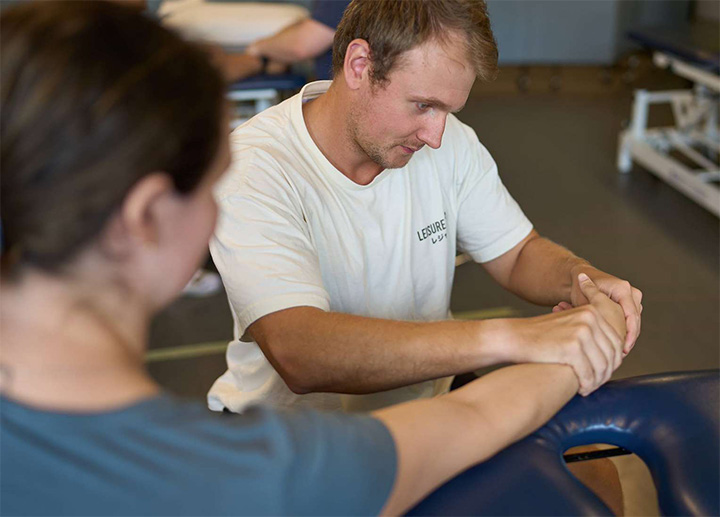
Deliver More Comprehensive Patient Care
Advance beyond foundational practice by strengthening your skills in clinical communication, motivational interviewing, pharmacology and diagnostic imaging. These added competencies will help you develop a more complete understanding of each patient’s condition, personalize treatment goals, optimize plans of care and advocate effectively for your patients.

Experience Authentic Learning, Delivered Virtually
Engage with expert instructors and guest lecturers through interactive digital content, patient assessments and authentic clinical case studies. Collaborative discussions and group work allow you to apply new knowledge, explore diverse perspectives and strengthen reflective practice while building a connected online learning community.
Advance Your Skills Through Residency and Mentorship
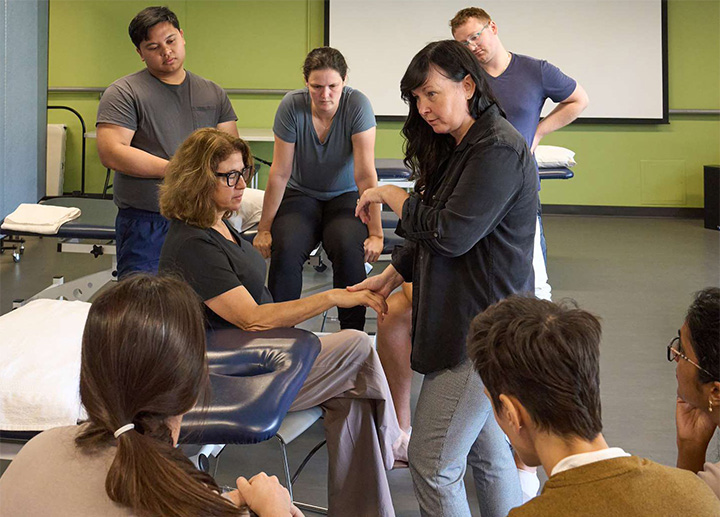
Strengthen your clinical reasoning and manual therapy skills through immersive on-campus residencies, hands-on simulations and personalized feedback from Canadian manipulative therapy experts. Apply your learning through more than 150 hours of clinical mentorship with an FCAMPT-certified mentor, bridging academic study and advanced musculoskeletal physiotherapy practice.
Is CMP Right for You?
Advancing Your MSK Practice
A practising physiotherapist working in orthopaedic or musculoskeletal care who wants to develop a broader, more advanced scope of clinical knowledge and skills.
Strengthening Clinical Decision-Making
A physiotherapist seeking to enhance clinical reasoning and evidence-informed practice to develop strong self-reflection skills in order to assess potential biases and ethical considerations and evaluate their impact on client care.
Building Well-Rounded Clinical Expertise
A physiotherapist interested in developing complementary competencies in manual therapy, motivational interviewing, pharmacology and diagnostic imaging as part of advanced musculoskeletal practice.
Information Sessions
CMP Field Lead
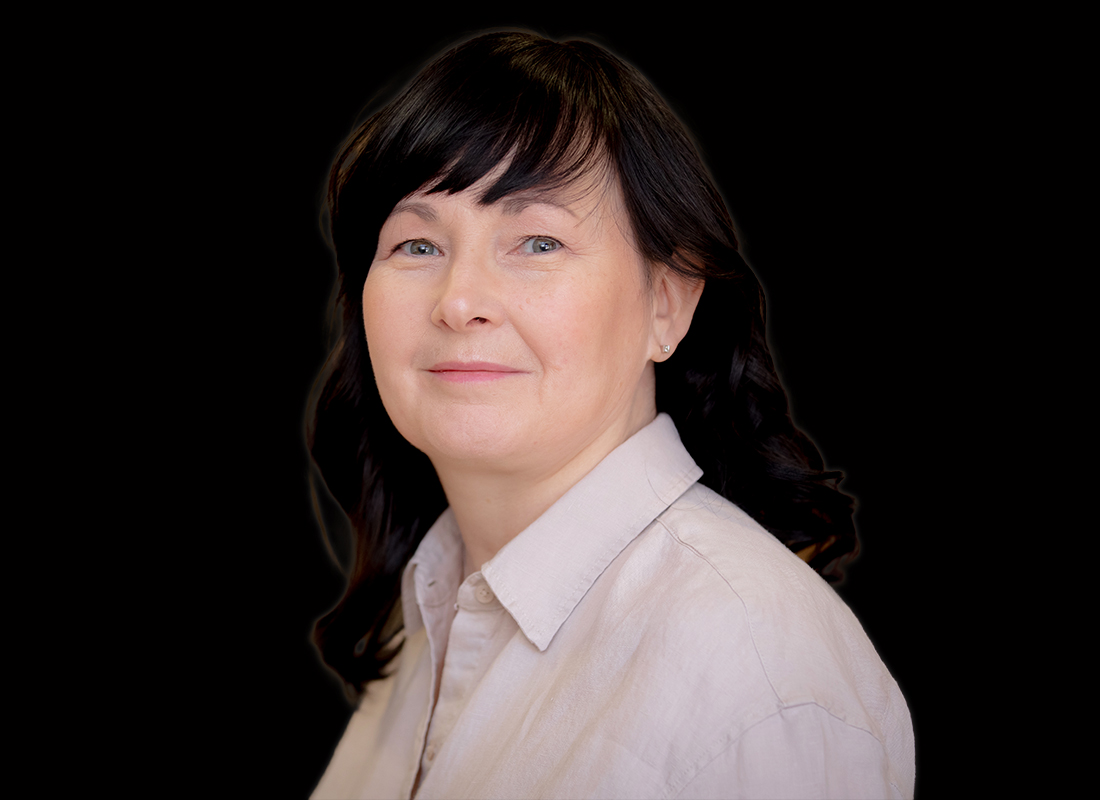
Heather Gillis
PT, MSc, FCAMPT
Heather graduated from Western University with a professional degree in Physiotherapy and completed her Masters in Clinical Anatomy in 2010. Heather also completed her Diploma in Manipulative Therapy in 1999 and is a Fellow of the Canadian Academy of Manipulative Physiotherapy. She is a national examiner, senior instructor and education chair with the Orthopaedic Division of the Canadian Physiotherapy Association and a professor at Western University. Heather has completed training in intramuscular dry needling. She volunteers her time and clinical insights to physiotherapists looking to advance their skills and is actively involved in various community events.
Program Structure
Over the course of one year, you will develop the necessary clinical reasoning, life-long learning strategies and clinical skills to graduate as an advanced health care practitioner. This program is taught through a combination of online courses, on-campus residency periods (see below) and clinical mentorship. You will have the flexibility of self-directed learning with access to our world-class instructors.
The Comprehensive Musculoskeletal Physiotherapy (CMP Stream) program is an intense one-year program comprised of seven online courses - two academic courses, three clinical specialty courses and two full-year courses. There are three intensive residency periods wherein students are required to be on campus at Western. Those periods take place in September, February and July.
- This program option prepares physiotherapists to be advanced clinicians in the assessment and treatment of neuromuscular dysfunction and provide effective management of complex clinical conditions.
- Through advanced clinical reasoning, evidence-informed and experienced orthopaedic practice, the physiotherapist will be able to apply the biopsychosocial framework to manage clients, and when indicated, use the skill of manipulation safely, effectively and appropriately in their own clinical practice.
- Graduates are eligible to apply as a fellow in the Canadian Academy of Manipulative Physiotherapy (CAMPT). Graduates obtain the research and professionalism competencies necessary for CPA specialization.
- This program option requires students to be on campus for residency periods in September, February and July (see below).
Term 1 (Fall)
September–December
- AHCP9600: Critical Appraisal of Health Literature (on campus)
- AHCP9640: Advanced Orthopaedics (on campus)
- AHCP9620: Clinical Mentorship
- On-Campus Residency Period: 2-3 weeks in September
Term 2 (Winter)
January–April
- AHCP9650: Advanced Orthopaedics II (on campus)
- AHCP9620: Clinical Mentorship (Continued)
- AHCP9630: Research Experience
- On-Campus Residency Period: 3 weeks in February/March
Term 3 (Summer)
May–August
- AHCP9610: Advanced Professional Practice (Cont'd until June, on campus)
- AHCP9620: Clinical Mentorship [Completion of clinical mentorship hours and satisfactory performance on clinical exam (to be scheduled during summer residency period - July).]
- AHCP9630: Research Experience [Presentation of results from a supervised research experience at the AHCP Research Day (to be scheduled in July each year).]
- On-Campus Residency Period: 1-2 weeks in July
AHCP9600: Critical Appraisal of Health Literature
This course is designed to provide participants with an introduction to quantitative research methods including basic study design and critical appraisal of studies evaluating the effectiveness of an intervention:
- Validity of a diagnostic test
- Identification of risk factors for disease development
- Identification of prognostic factors for disease outcomes
- The quality of a systematic review
AHCP9640: Advanced Orthopaedics
This course emphasizes the principles, rationale, effects, and practical application of advanced practice musculoskeletal clinical reasoning and the application of manual therapy involving the upper and lower quadrants, including:
- Use clinical and deductive reasoning in the assessment and treatment of neuromusculoskeletal clients by considering the best available evidence, reflecting on clinical expertise and respecting the wishes of the patient
- Recognize and differentially diagnosis patients presenting with neuro-musculoskeletal syndromes involving the upper and lower quadrants by triangulating data based on understanding pain mechanisms, clinical patterns (evidenced informed clinical history and examination), natural history, and prognostic indicators within the biopsychosocial framework
- Identify indications and contraindications (red, yellow, blue flags) for manual therapy including manipulation
AHCP9620: Clinical Mentorship
One hundred and fifty hours of clinical mentorship will be completed in a designated clinical placement setting(s). If there is an eligible appropriate FCAMPT mentor close to the student’s permanent residence, the mentorship can be organized in the student’s locale. If an appropriate mentor is not available near the student’s home, the mentorship will be organized with a FCAMPT mentor in the London region for a one-week block (or timeline arranged by the student and the course manager) after each on-site block. The clinical mentorship is targeted to advance the goals of the clinician including providing mentorship opportunities with advance practice roles.
AHCP9630: Research Experience
Various research experience projects will be offered by researchers affiliated with Western University. The course will provide students with the opportunities to be part of a group project that may involve systematic reviews, knowledge translation, or data collection for a new or ongoing project related to orthopedics or manual therapy. This course will culminate in a presentation at Research Day in July.
AHCP9610: Advanced Professional Practice
This course introduces medical diagnostic testing and pharmacology to the advanced orthopaedic physical therapy practitioner. It will also focus on:
- Professionalism
- Critical thinking and clinical reasoning
- Reflective practice/experiential learning/lifelong learning
- Leadership within the orthopaedic physical therapy practice
- Pharmacology and MSK conditions
- Diagnostic imaging and MSK conditions
AHCP9650: Advanced Orthopaedics II
This course will be a continuation of AHCP9640 with further learning objectives including:
- Recognize and differentially diagnosis patients presenting with complex neuro-musculoskeletal syndromes involving the upper and lower quadrants
- Appreciate the interdependence and limitations of the patho-anatomical, biopsychosocial and functional model for hypothesis generation
- Demonstrate advanced clinical reasoning and problem-solving skills in the treatment of patients with complex neuro-musculoskeletal problems which includes identifying dominant pain mechanisms and biopsychosocial issues
- Discuss the impact of work-related injuries on prognosis and predicting rehab outcome and management strategies
- Review recent scientific evidence pertaining to the treatment properties of orthopedic conditions including those that may require manual therapy treatment techniques and understand how such information can be used to promote an evidence-informed approach in clinical practice
AHCP9680: Clinical Consolidation (CMP)
This mandatory course consolidates theoretical knowledge and practical skills covered in AHCP9640 and AHCP9650 advanced orthopaedic courses. This course links the advanced orthopaedic courses, the clinical mentoring hours and the critical appraisal of the evidence that students accumulate during the prior academic year with a patient presentation from the student’s clinical caseload. There is also practical examination that tests practical, oral and clinical reasoning skills associated with spinal manipulation.
The Advanced Standing Stream is designed for physical therapists who already possess the Advanced Diploma in Manual and Manipulative Therapy will receive advanced standing for AHCP9620, AHCP9640, AHCP9650 and AHCP9680. Course requirements will focus on Research Methods (AHCP9600), Advanced Professional Practice (AHCP9610) and a Group Research Project (AHCP9630). This stream does not have a residency requirement.
- This program option is designed for registered fellows of the Canadian Academy of Manipulative Physiotherapy (CAMPT) possessing an Advanced Diploma in Manual and Manipulative Therapy and wanting to expand their professional and research interests.
- Students in this stream participate fully online and take fewer courses than those in the full program.
Term 1 (Fall)
September–December
- AHCP9600: Critical Appraisal of Health Literature
- AHCP9630: Research Experience
Term 2 (Winter)
January–April
- AHCP9610: Advanced Professional Practice (March - May)
- AHCP9630: Research Experience (Continued)
Term 3 (Summer)
May–August
- AHCP9610: Advanced Professional Practice (Cont'd until June)
- AHCP9630: Research Experience [Presentation of results from a supervised research experience at the AHCP Research Day (to be scheduled in July each year).]
AHCP9600: Critical Appraisal of Health Literature
This course is designed to provide participants with an introduction to quantitative research methods including basic study design and critical appraisal of studies evaluating the effectiveness of an intervention:
- Validity of a diagnostic test
- Identification of risk factors for disease development
- Identification of prognostic factors for disease outcomes
- The quality of a systematic review
AHCP9630: Research Experience
Various research experience projects will be offered by researchers affiliated with Western University. The course will provide students with the opportunities to be part of a group project that may involve systematic reviews, knowledge translation, or data collection for a new or ongoing project related to orthopaedics or manual therapy. This course will culminate in a presentation at Research Day in July.
AHCP9610: Advanced Professional Practice
This course introduces medical diagnostic testing and pharmacology to the advanced orthopaedic physical therapy practitioner. It will also focus on:
- Professionalism
- Critical thinking and clinical reasoning
- Reflective practice/experiential learning/lifelong learning
- Leadership within the orthopaedic physical therapy practice
- Pharmacology and MSK conditions
- Diagnostic imaging and MSK conditions
On-site residency periods and one-on-one mentorships support online coursework, providing students with face-to-face instruction from prominent Canadian manipulative therapy experts, many of whom are also graduates of this program.
Advanced clinical reasoning manual therapy skills are the foundation on which students develop additional competencies. Residency periods support students’ mastery of musculoskeletal physiotherapy skills through hands-on instruction and simulation activities. During this immersive on-campus learning experience, students have the opportunity to observe advanced health care practitioners in action, and have their own skills assessed. Through simulation activities and clinical skills labs, students articulate their rationale for treatment and receive feedback from instructors on their decision making and their ability to interpret research.
In the program’s mentorship course, students are paired with FCAMPT-certified mentors in their own community In over 150 clinical hours of mentorship, students have the opportunity to apply theory to patient interactions, providing a transition from academia to clinical practice under the guidance and leadership of an experienced mentor. Students become reflective practitioners, as they apply what they learned in mentorship into the class discussions and learning activities within their courses.
Lead. Mentor. Advocate.
Our students leave the program knowledgeable about up-to-date best practices, and with the confidence to continue to integrate innovative approaches and research into their own practice as well as other professional activities. They are equipped with the research and appraisal skills to become better evidence-informed practitioners, and to participate effectively in clinical research projects. Advanced healthcare practitioners foster effective communication and collaboration in interprofessional settings, and advocate on behalf of their clients. Many of our graduates become valuable mentors within their own organizations and communities.
See the bigger picture. Advance your practice.
Graduates from the Advanced Health Care Practice - Comprehensive Musculoskeletal Physiotherapy master's program obtain a global understanding of patient-centered care. Students learn to leverage evidence-informed clinical skills together with advanced clinical reasoning to assess and manage patients with complex clinical presentations. The program is designed to help students develop strong self-reflection skills in order to assess potential biases and ethical considerations and evaluate their impact on client care.
Frequently Asked Questions
Click below for answers to commonly asked questions related to program content, structure, partnerships and credentialing.
This hybrid program is designed to give clinicians the flexibility to learn primarily from home while still benefiting from in-person experiences.
There are three on-site residencies each year, held in:
- September
- February
- July
The remainder of the program is delivered online through a combination of:
- Synchronous learning (live, scheduled sessions with instructors and peers)
- Asynchronous learning (self-paced coursework, readings, and discussion activities)
Throughout the program, you’ll complete weekly learning modules that are both synchronous and asynchronous. This could include a live session live during the week or written discussions.
If you’re thinking of applying, there are two streams that you’ll be applying for: the CMP stream or the FCAMPT stream.
The FCAMPT stream is for those clinicians who already have a diploma in advanced manual and manipulative therapy and are already a member of CAMPT. You’ll get a master’s degree as an FCAMPT physiotherapist. You will only be required to take three master’s-level courses: Critical Appraisal, Research Experience and a Professionalism course. You will be exempt from the four other courses.
If you’re thinking of the CMP stream, it means that you’re looking to become a fellow within the CAMPT stream. That is seven courses that go the entire year.
Tuition is the same for both streams.
You may continue working while completing the program. Because most of the program is delivered online, you can complete the majority of your studies from home, with three on-site residencies held in September, February and July.
The program is intensive, so students are encouraged to consider part-time employment based on their personal circumstances and capacity. For some students, this may mean working 30 to 35 hours per week, while for others, it may mean working 20 to 24 hours per week.
The mentorship component is also part of this program, and it’s built into the learning objectives within the CMP program.
You will acquire mentors throughout the year. We encourage you to find mentors locally in your community to make it easy for you to acquire the hours.
You’ll need a total of 150 direct mentoring hours throughout the program. Part of your prerequisite to get into the program will be 30 hours of mentoring, which will go toward the 150 hours.
If you are thinking of taking the CMP field, the biggest outcome is that you’ll have the skills to be a clinician for all types of musculoskeletal conditions. You’ll feel highly confident providing care that is grounded in evidence and best practices.
Many of our graduates have gone on to leadership positions. For example, our current orthopaedic division president is a graduate of our program. Currently, we’ve got three of our graduates who are with three different NBA teams. We have another graduate who is with an NHL team, as well as in government and military positions as advanced health care clinicians.
The opportunities are endless, but the most important thing is that your confidence and your delivery of care will be at a higher level.
If you’re thinking of coming into the program, the average clinician comes from all over Canada. We have physiotherapists from British Columbia to Newfoundland who’ve been through our program.
The average clinician has anywhere from three to seven years of experience, sometimes more and sometimes less. They’re in primary care orthopaedic physiotherapy.
Students that don't have two years of orthopaedic clinical experience:
Students can still apply but the admission committee does consider the amount of clinical experience as a criteria for selecting successful applicants.
International students:
Admission is not offered to international students. All applicants must be licensed health care professionals in Canada.
Canadian graduates working abroad:
A requirement of this program is that students must complete clinical mentorship hours at an approved clinical site. This requires students to have current registration with the appropriate College and have malpractice insurance that is applicable to their chosen clinical site(s).
Students with advanced standing who are not required to take the clinical mentorship course (eg. already have FCAMPT) may request special consideration to enter the program.
Students who can’t attend in-class sessions at Western:
It is mandatory for students to attend the on-site residency periods on Western’s campus. If you are unable to attend, you will be required to withdraw from the program.
Physical therapists who are CAMPT fellows or already possess the Advanced Diploma in Manual and Manipulative Therapy do not have to attend residency periods.
Please bring a copy of your Malpractice Insurance with you on the first day of orientation.
Students must be registered as full-time graduate students in the AHCP program and are encouraged to continue to work clinically (part-time) during the program in order to be able to incorporate new knowledge and skills into their clinical practice.
Students can expect to devote at least 20 – 30 hours per week to program-related activities (i.e. studying, reading, assignments, etc.).
All AHCP students pay the same graduate fees. Those students involved in the mentorship program, are levied a fee in addition to graduate fees.
Students participating in the mentorship program are charged an additional mentorship fee on top of standard graduate tuition and fees.
In Their Words
Major Riaz Ingar, Master’s of Clinical Science Alumni (CMP)
The mentorship and training I received from the CMP team gave me the confidence and drive to advise on best practices and insist on PTs always having a place at the table.
Ready to Apply?
Don't delay. Applications are reviewed on a regular basis, starting November 1st. Apply today for your best chance at admission.
Your Life at Western
Campus Life
Connect, explore, and thrive on our close-knit campus.
Campus Tours
Campus tours are available for anyone interested in attending Western.
About London, Ontario
Discover all that Western and London have to offer.